
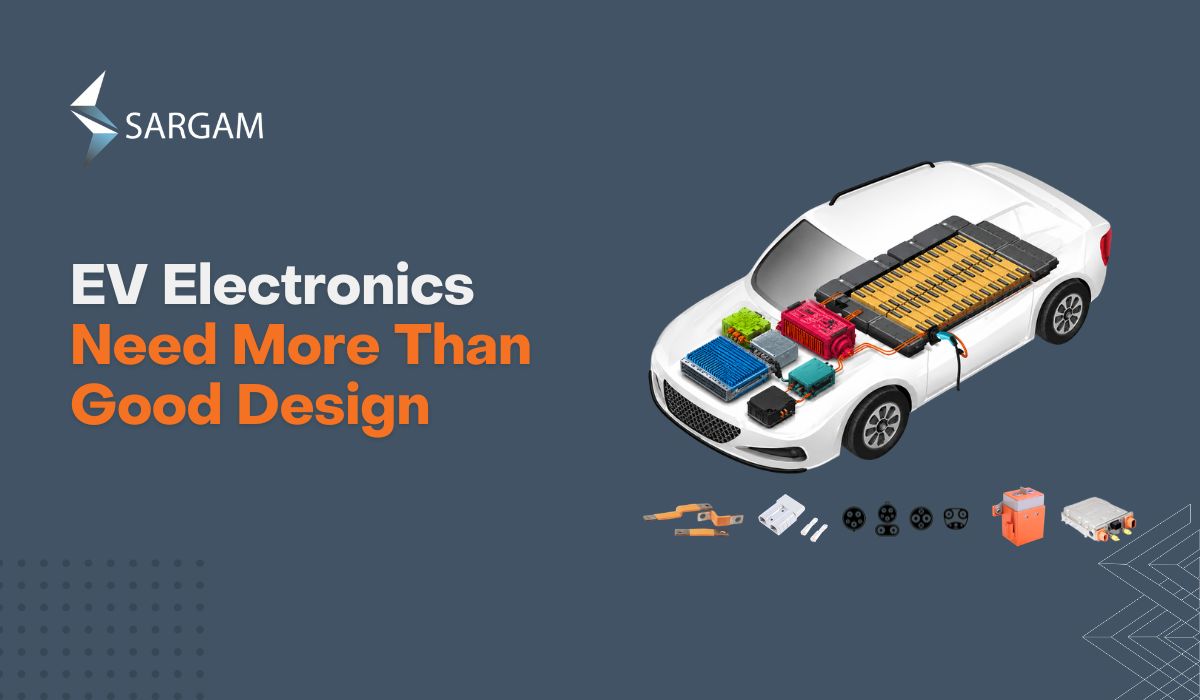
Electric vehicles are changing how power is generated, controlled and distributed inside a vehicle.
Behind the motor, battery and charging system, there are many critical electrical and electronic components. These include busbars, connectors, terminals, contact points and power electronic assemblies.
These parts may look small compared to the overall EV system. But their performance directly affects conductivity, heat control, signal stability and long-term reliability.
This is where surface finishing becomes important.
Silver plating supports EV electronic components by improving conductivity, protecting contact surfaces and helping components perform consistently over long operating cycles.
Why Surface Performance Matters in EVs
EV systems carry high electrical loads. Current flow must remain stable. Contact resistance must stay low. Heat generation must be controlled.
Even a small variation in surface quality can affect performance.
Poor surface finish may lead to unstable electrical contact. It may increase resistance. It may create heat at connection points. Over time, this can affect the reliability of the assembly.
That is why plating is not just a finishing step. It becomes a performance requirement.
For EV electronic components, the plated surface must support conductivity, durability and repeatability.
The Role of Silver Plating
Silver offers excellent electrical conductivity. This makes it suitable for components that need stable current transfer and reliable contact performance.
In EV applications, silver plating is commonly considered for components such as busbars, connectors, terminals, contact areas and power electronics interfaces.
The purpose is not only to coat the surface. The purpose is to create a controlled functional layer.
This layer must maintain conductivity. It must resist surface degradation. It must perform under temperature variation, vibration and repeated contact conditions.
When applied with the right thickness control and process discipline, silver plating can help improve long-term electrical stability.
From Prototype to Production
EV programs often begin with small development batches.
At this stage, the focus is on testing, validation and design improvement. Plating requirements may still evolve. Thickness, masking areas, base material compatibility and contact zones need to be studied carefully.
But once the design moves closer to production, the expectations change.
The process must become repeatable. The thickness must remain consistent. Selective plating zones must be clearly defined. Inspection must be reliable. Throughput must be planned.
A plating partner who understands this transition can help reduce delays between validation and production.
Why Early Collaboration Helps
Many plating challenges can be avoided when discussions start early.
The component design, base material, current-carrying requirement, contact area and expected operating environment should be understood before plating begins.
This helps define the right plating thickness, pre-treatment process, masking method and quality checks.
Early involvement also helps identify possible risks before mass production. It reduces rework. It improves process stability. It supports faster qualification.
For EV electronics, speed matters. But speed without control can create reliability issues later.
Process Stability Builds Confidence
Long-term EV reliability depends on consistency.
Every batch must meet the same performance expectation. The plated layer must be uniform. Adhesion must be strong. The surface finish must remain stable. Inspection must detect variation before it becomes a field issue.
This is especially important when volumes increase.
Scaling from a few samples to thousands of components is not only a capacity challenge. It is a process discipline challenge.
The right plating partner brings control, documentation, testing and repeatability into the process.
Supporting Future-Ready EV Electronics
EV technology will continue to evolve. Components will become more compact. Power density will increase. Reliability expectations will become stricter.
In this environment, surface finishing will play a stronger role in component performance.
At Sargam Industries, selective silver plating for EV electrical and electronic components is approached with controlled thickness management, process validation and repeatable quality systems.
Because in EV electronics, performance does not depend on design alone.
It also depends on the reliability of every contact surface. Sargam Industries brings nearly five decades of experience in precision plating solutions for critical electrical and electronic components. With strong expertise in selective silver plating, controlled thickness management and process repeatability, Sargam supports components that are used in demanding industrial applications, including electrical and electronic systems for the automotive and EV ecosystem.